Stay Awesome

VARICELLA
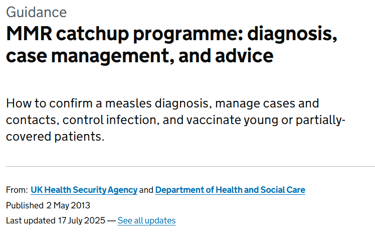
Find most of the information you need in these resources
Always refer to your local signed PGD's in practice, and remember the Green Book takes priority over the SPmC - and sometimes WHO takes priority over the Green Book! They don't always say the same!


Things to know in practice currently:
10th Feb 2026: MMRV programme: information for healthcare practitioners guidance updated to include guidance on use of ibuprofen and the administration of MMRV vaccine to a child who has continued close contact with a pregnant woman.
21st Jan 2026: Some MUCH NEEDED clarification updates in the PGD template for MMRV
15th Jan 2026: Varicella Green Book Chapter revised.
19th Dec 205: MMR PGD amended to:
• remove the recommendation to offer MMR to children in the selective catch up cohort who have immunity against chickenpox and require MMR protection; children born on or after 1 January 2020 should be offered the MMRV vaccine instead
• clarify Varilrix® and Varivax® as the monovalent varicella vaccines in the appendix
• re-clarify in special considerations and additional information, which MMR containing vaccine should be offered based on date of birth
17th Dec 2025: The MMRV programme: information for healthcare practitioners has been updated ready for Jan. Also, a common query clarified, ‘What counts as a valid second dose of MMR-containing vaccine?’ Another one to check out and bookmark.
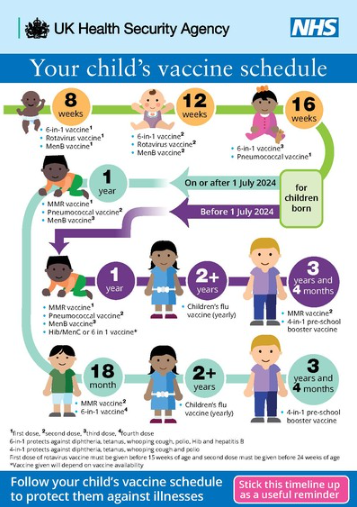
10th Dec: Childhood schedule changes 2025 and 2026: information for healthcare practitioners doc updated to account for MMRV. This is a VERY useful doc. Get it bookmarked ASAP!. This doc has also been produced: MMRV and febrile convulsions. Febrile convulsions are a common in children with a high fever, this guidance explains to parents and carers what a febrile convulsion is, and when to seek medical help.
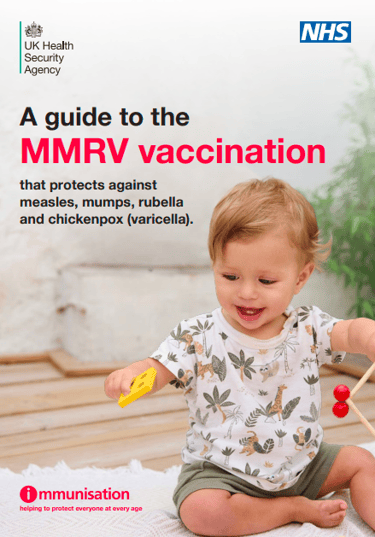
8th Dec: New MMRV poster for the public. And f you signed up for the webinar last week about MMRV the resources have been emailed out now. The slides and webinar recording link are here.
3rd Dec: Varicella Green Book chapter updated today, No doubt measles, mumps and rubella updates will follow...
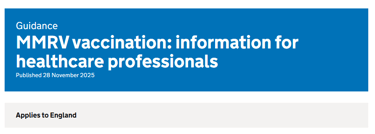
28th Nov: MMRV information for healthcare practitioners is here!
26th November: The latest Vaccine Update newsletter has landed. It's an informative read with some bite-sized summaries around the new MMRV programme (also the PGD's are out for that prog too MMR and MMRV).
6th Nov: Check out the new (very informative) slideset about the MMRV programme.
31st October 2025! VERY IMPORTANT DOCUMENTS relating to MMRV programme. AND here's the LETTER
On Wednesday 3 December 2025, 14:00 – 15:15, the UK Health Security Agency (UKHSA) Immunisation Team will be hosting a webinar about the second phase of the planned changes to the routine childhood vaccination schedule which will be implemented from January 2026. This will include the introduction of a varicella (chickenpox) vaccination programme (MMRV) and a new routine vaccination appointment at 18 months of age. Health Professionals only. Sign up here.
8th September: Could this be a sign of things to come? Priorix Tetra has got a UK license (MMRV vaccine)... Meanwhile, if you want to get ahead, here's the European licensing information for Proquad, (the most talked about so far) candidate for the childhood programme.
29th August: Well I , like many other nurses, woke up today to find a flurry of 'varicella from Jan 26' themed news headlines and a media frenzy in response to a government press release. Still important to be aware that we don't have exact confirmed details on how this will be implemented but from my multiple whatsapp messages this morning I can see a lot of staff are feeling confused and asking 'did I miss something?'. As far as I can see, we didn't. If you haven't already done so, refer to all the linked info below for JVCI discussions and government thoughts on the matter to get a bit of an insight into where we are at. I'll be keeping a close eye on any new documents coming through and will post them here and on the news page when anything arrives. Here are some of the national news headlines from today in the meantime: BBC, Guardian, Inews.
16th July 2025: The JCVI meeting minutes from June have been published. This bit is particular useful to know and differs from the GP contract information further down. "JCVI had previously recommended a two-dose universal varicella vaccination programme using the combined MMRV vaccine for infants at 12 and 18 months of age and a catch-up programme for children under the age of 11 years. Since then, the Committee had been informed that the catch up was not feasible due to vaccine supply issues. The Committee agreed that the MMRV selective catch-up programme should be advised as:
Two doses for children between 12 and 18 months of age.
One dose for children between 18 months and 3 years 4 months of age. The vaccine would be given to children at 3 years 4 months of age.
A delayed selective catch-up for children above 3 years 4 months to 6 years of age.
Children above 6 years of age would no longer be eligible.
The Committee felt that the catch-up programme would offer a single dose of the MMRV vaccine to a greater number of children, and this would reduce the risk of cohorts growing up unprotected against varicella. The Committee noted that some children would be given one dose of the MMRV vaccine, in comparison with two doses in the previously advised catch-up programme. Data from the USA indicated that there was still a big impact on disease severity and transmission when a single dose was introduced. This provided the committee with further reassurance."
7th April 2025: The chickenpox public health management guidance has been updated today to reflect changes to health protection regulations.
28th Feb 2025: GP contract 25/26 says a varicella introduction and catch-up will be effective from 1st Jan 2026:
The second update in 2 months to the Varicella Green Book chapter was published on the last day of September 2024. This change was following the withdrawal of VZIG, including use of iv Varitect CP for Group 1 neonates at highest risk of severe varicella.
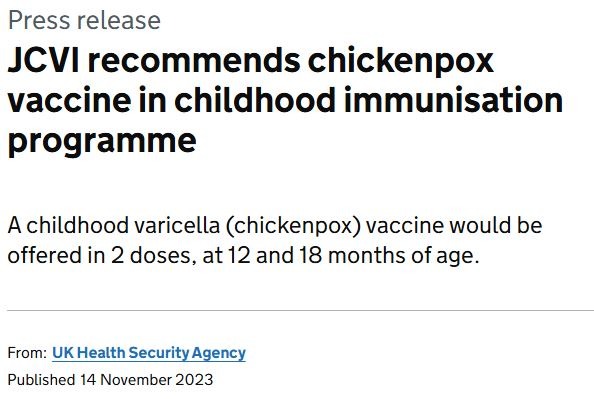
NOV 2023 Chickenpox programme on the way? See JCVI notes for further info. page 28+ Suggestions include a childhood varicella vaccine to be offered in 2 doses, at 12 and 18 months of age with a catch up programme for older children Read all about it in the JCVI notes. Lots to be considered there.
Useful varicella links and further reading:

Useful MMRV links and further reading:

Bits and bobs to casually drop into conversation
Did you know....
Chickenpox is most common in children and is usually mild (although not always- it can be VERY serious in some). When adults get it, however, they can get really really unwell.
Some people have been known to have 500 spots!!! (at the time of writing my mate's kid has a spot on his eyeball!)
Chickenpox is VERY contagious. There is a 90% chance you will catch it from someone who has it if you have not had it before.
Getting chickenpox once generally means someone will not get it again. However, in rare cases, it can strike more than once in the same person.
Chickenpox cases were significantly reduced during the pandemic lockdowns, meaning there is currently a larger pool of children than usual without immunity. Could this be part of the consideration to introduce a vaccine programme?
Chickenpox is a seasonal disease. Most cases occur in winter and spring. There is often a peak between March and May.